
Canon EF 70-300mm f/4.5 - 5.6 L IS USM
Introduction:
If you're looking for a very high quality general purpose lens above 50mm and you don't need a very wide aperture, then this is absolutely at the top of your options list.
As a general purpose lens for travelling, holiday, wildlife, sports, I can't think of a better option. The image quality is very high and never an issue. The materials and build quality are also near perfect - this is a Canon "L" Lens in every way with super-fast autofocus - literally one of the fastest, image stabilisation and perfect balance.
The first things to be clear on are:
What is this lens for - everything beyond 50mm reach
What is this lens good at - everything within its focal length and aperture
What are the relative weaknesses of this lens - only the f/4.5 - f/5.6 but this is rarely an issue.

Very different examples. One taken very close at 70mm the other a distant shot at 300mm - without changing lenses there is nothing more to add
![20220922165740_IMG_0420[1].jpg](https://static.wixstatic.com/media/dbf505_188adc4b9f3f402bae8aaedb54a0b84f~mv2.jpg/v1/fill/w_384,h_256,al_c,q_80,usm_0.66_1.00_0.01,enc_avif,quality_auto/20220922165740_IMG_0420%5B1%5D.jpg)

General:
This lens sits right in the middle between the 70-200 and 100-400 stablemates. Smaller and lighter than the 70-200 f/2.8, in the real world about the same as the 70-200 f/4 - not quite as wide aperture at 200 but the extra focal length flexibility. Smaller and lighter than the significantly heavier 100-400 but with 70mm makes this much more flexible in use.
There isn't a lot of specific explanations to go into a general purpose lens requirement compared to specialist prime lenses; the theme here is always going to be image quality and flexibility.
On the Canon 5Ds you're able to benefit from almost all of the 50Mp resolution - this lens is very sharp. On the Canon R7 body, you have a 112-480mm lens, now it's a top tier wildlife lens also, the smaller format giving the R7 an deeper depth of field to boot - you can't go wrong.
The lens though extending during zooming does not rotate and accepts 67mm filters, the standard size you probably already have in your bag. The filter thread as i think with all Canon "L" lenses is metal so fast to use and doesn't cross-thread like cheaper plastic lens threads do.
Lens Optical Quality:
Saving money buying a cheap lens is always going to have serious consequences for image quality, with this lens you're getting image quality up at the best achievable for zoom lenses. You're getting a lot of flexibility without quality risks. You're spending a lot of time and usually money to get your travel, wildlife and general photos, usually flexibility and quality are compromised by pack size, here is the chance to have your travel bag limited in size. To repeat - do not get a lens of poor quality, no matter how much you save, you will literally be wasting time and money.
There is always lots of information, advertisements and "paid for" reviews out there. By all means look at them for information, they are a good source; but be wary of just accepting the conclusion unless it draws comparisons.
There aren't bargains out there - on a like for like basis the only good deals can be when buying secondhand, after weighing up the risks. Risks are clear but if you buy a Canon L series lens the risk is very very low and the gains clear.
On our 5Ds' with 50Mp resolution and R7 with the same sensor pixel sizes, errors and sharpness issues from poorer lenses will be immediately clear. This lens delivers perfectly, it's that sharp in the real world.
The lens image quality of course is not limited to the centre and edge sharpness but also the "Bokeh", or "out of focus highlights", these are also very good in comparison with similar lenses - it is worth remembering that the 70 to 135mm end of this lens allows Portrait photography, you're not getting f/1.2 - f/2.8 equivalence, but is it useable - absolutely!

The adult flying in here alongside the young Swallows was grabbed on the fly with camera settings set up in advance. The autofocus and IS delivered in an instant. Here at full zoom with the R7, effectively 480mm f/5.6.
(This is a cropped from a much larger original image).
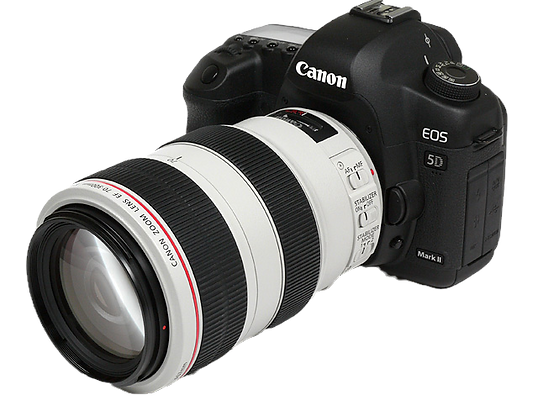
For comfort this is just the right size and weight, the balance is very comfortable, the zoom and focus rings fall very naturally to hand.
Handling, Carrying:
There are four factors which count here, weight, bulk (size), comfort to hold and adjust and resilience / toughness so this is clear here:
The 100-400 L is by far the biggest and heaviest here, that is not saying too heavy or too big, but relative to the others it is very noticeable. This puts it out of the best here, but if you need flexibility and 400mm you have to look at it.
The 70-300 IS usm is by far the lightest and smallest here - in many respects therefore the best. You need to add to this the extra care you must always take as it is not as tough or robust as the others, also as the barrel rotates when focussing this will make a difference when you have polarising filters fitted. The last two points here drop it below the best here, especially given the environment a general purpose lens will be used in.
The 70-300 L & 70-200 f/4 L ii are ahead in the criteria applied here. They are not too big or heavy for this to be a hindrance, they are "L" series lenses of metal construction throughout so as tough and robust as a lens will get.
The 70-200 L has an advantage of not extending when zooming thus reducing the risk of dust ingress over time. The 70-300 L has the obvious advantage of focal length flexibility, so you are potentially carrying less lenses which is also a huge advantage.
In this comparison the "mega-zoom options such as 60-600 lenses are not included, just because they are clearly in a different use category.


Decision Options:
When looking for a flexible general purpose lens, the spectrum of choices is not always clear. By default a zoom is necessary, the rest is arrived at by looking at available options.
Our decision choices were:
a) Canon EF100-400 f/4.5-5.6 L IS II:
Pros:
• Flexibility of 100 to 400mm range.
• IS "Image Stabilisation".
• Excellent image quality.
Cons:
• Much higher cost.
• Heavier and bulkier.
• Barrel extends so dust ingress.
b) Canon 70-300mm f/4-5.6 L IS usm:
Pros:
• Flexibility of 70-300mm (112-480mm on apsc).
• IS "Image Stabilisation".
• Excellent image quality.
Cons:
• Barrel extends so dust ingress.
c) Canon 70-200mm f/4 IS ii usm:
Pros:
• Focal length flexibility.
• Excellent image quality.
• Barrel doesn't extend.
Cons:
• Limited Zoom range.
d) Canon 70-300mm f/4-f/5.6 IS usm:
Pros:
• Focal length flexibility.
• Relatively small & light.
• Very, very good image quality.
Cons:
• Less Robust
• Front element rotates

Final Decision
Revisiting the criteria:
Focal Length:
70-300mm gives great flexibility for general purpose, whilst 70-200 lenses have the advantage of not extending, the 300mm reach allows wildlife and sport to be added to your subject options, and of course for travel advantages are clear. (70-200 f/2.8 lenses give low light performance advantages which cannot be ignored but if you're looking at this lens you know this and have other demands, so not included here). The 70-200 f/4 has a minor weight and minor aperture advantage at 200, but not enough to sway our choice. At 70mm the 70-300 is the shortest of the group here.
Mounted on our R7's the 480mm f/5.6 with apsc depth of field makes this a very strong wildlife lens with the added advantage of wide zoom range whilst remaining small and light.
For us the 70-300 is actually a clear winner here.
Image quality:
Based upon real world testing in use these four lenses were very difficult to split, all are very good.
All have Image Stabilisation, with the 70-300 being easily as fast as any here so no disadvantage. In low light a 70-200 f/2.8 would win but with the image stabilisation being so good that advantage is actually very, very small.
All lenses here deliver very similar results, the 100-400 is very strong but only marginally better.
Design and Build Quality:
The design of all three "L" lenses is top class, these are high end lenses and materials and build quality are arguably the best available.
The 70-300 IS usm clearly loses out here, it isn't as robust, solid and falls into a lower catagory despite good optical quality.
Handling:
The 70-300 IS usm is very lightweight without many noticeable issues beyond toughness and build quality, so for basic use and handling it wins by these measures comfortably. The lens does rotate when focussing this can be a serious issue when using polarising filters. When poor weather conditions and drops and bumps are taken into account more care is needed.
The 100-400 is bigger and heavier, out of optical necessity, this does make an impact - it's a lump; weight and bulk are it's only issues.
The 70-200 f/4 and the 70-300 L are difficult to split in terms of handling, both being excellent.
Conclusion:
Sometimes things just fall together and deliver an outcome which is hard for anyone to argue with, the 70-300 f/4-5.6 L usm has hit a sweet spot just about everywhere, so out of the options compared here it is a clear winner when flexibility without any quality loss is the criteria. We didn't expect it to be as good as it is and now as part of our gear it has a place it won't lose.
On our wildlife bodies the R7's the 480mm f/5.6 is outstanding, which is largely what it is used for; on the 5Ds' the focal range means only two instead of three lenses are carried for general and travel work.
In short no regrets it will deliver for you. At the cost you can buy this secondhand for now you can have this and the 85mm f/1.8 lens for portraits for less than the others.
Please use this link when considering purchasing this or similar equipment.
We may earn a small commission which is free for you.
Thank you, we hope this has helped.

Footnote:
This will be expanded upon from time to time, there is a lot more practical information we'd like to share and guides for more general use.
If you have any questions or would like some open clear specific feedback, just ask us here Contact Us.